
Executive Summary & Hypothesis
The Hypothesis: Shifting from asynchronous, multi-step manual data entry across fragmented tools to a single, synchronous reporting pipeline eliminates cross-system data drift and removes downstream reconciliation rework.
The Mechanism: Integrating an automated AI parsing utility extracts categorized entries from unstructured bank statements directly into a master register. This register then serves as the single source of truth to populate both operational tracking and accounting software concurrently.
The Operational Challenge
In growing financial and administrative workflows, tracking incoming revenue streams often requires updating multiple tools across different stages of the process:
- Bank Register Spreadsheet (Tool 1): Parsing bank statements line-by-line to categorize credits and debits into an active ledger.
- Operational Source Tracking (Tool 2): Logging where within the organization specific revenue streams originated.
- Financial Accounting Software (Tool 3): Updating general ledger and profit-and-loss (P&L) statements.
The Friction Point
Originally, parsing statement details was a manual, line-by-line task, and updating the three tools happened as separate, asynchronous steps. Because updates occurred at different times, minor discrepancies routinely emerged between the register, the operational report, and the accounting software, requiring time-consuming post-hoc audit checks and manual reconciliation.
Process Architecture & Pipeline Redesign
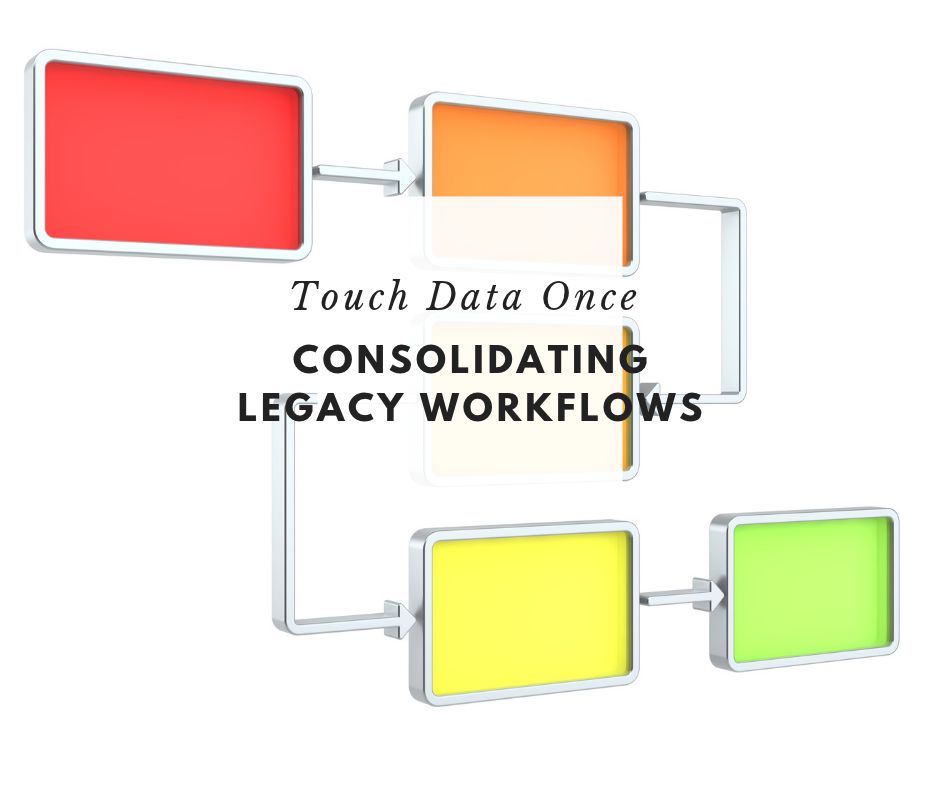
To eliminate data drift and redundant touches, I restructured the workflow around a single core design principle: Touch Data Once.
Workflow Improvements
- Front-End Automated Parsing: I configured a secure AI parsing utility to review incoming statement entries and automatically build the structured Bank Register Spreadsheet (Tool 1). I also incorporated a “human in the loop” data check for quality control.
- Synchronized Pipeline Execution: I then restructured the workflow so that updating the Operational Source Tracking (Tool 2) and Financial Accounting Software (Tool 3) occurs concurrently using the newly verified master register as the single source of truth.
Key Observations & Operational Outcomes
- Guaranteed Cross-System Alignment: Updating all three reporting tools at the exact same point in the workflow eliminated system discrepancies upon entry.
- Elimination of Reconciliation Rework: Cross-system data drift dropped to zero at input, completely removing the need for post-hoc audit checks.
- Shifted Administrative Focus: Moved the administrative role from manual line-item transcription across three separate tools to verifying the data output.
- Pragmatic Tooling: Demonstrated that meaningful process improvements do not always require expensive enterprise software overhauls often, it is simply a matter of thoughtful pipeline logic and smart tool application.
Practical Takeaway
Small-scale process engineering doesn’t mean replacing entire tech stacks. By focusing on data hygiene at the point of entry and building synchronization into the pipeline, administrative teams can eliminate hours of rework while strengthening internal controls.